
Medical Mimics
A Clinical Framework for Responsible Differential Discernment
Mental health professionals are trained in the biopsychosocial model. Yet in practice, many clinicians receive limited instruction on how to operationalize biological considerations responsibly within scope.
Clients may present with:
• Persistent fatigue that does not resolve with therapeutic intervention
• Mood instability that does not align with psychosocial stressors
• Anxiety that feels disproportionate or metabolically driven
• Depressive symptoms that do not respond to cognitive or behavioral treatment
When symptoms do not improve despite appropriate clinical care, clinicians are often left with uncertainty.
The question becomes:
Is this primarily psychological or could physiological factors be contributing?
Without structured guidance, this gap can lead to over-pathologizing, missed referrals, or delayed interdisciplinary collaboration.
Medical Mimics was developed to address this gap.
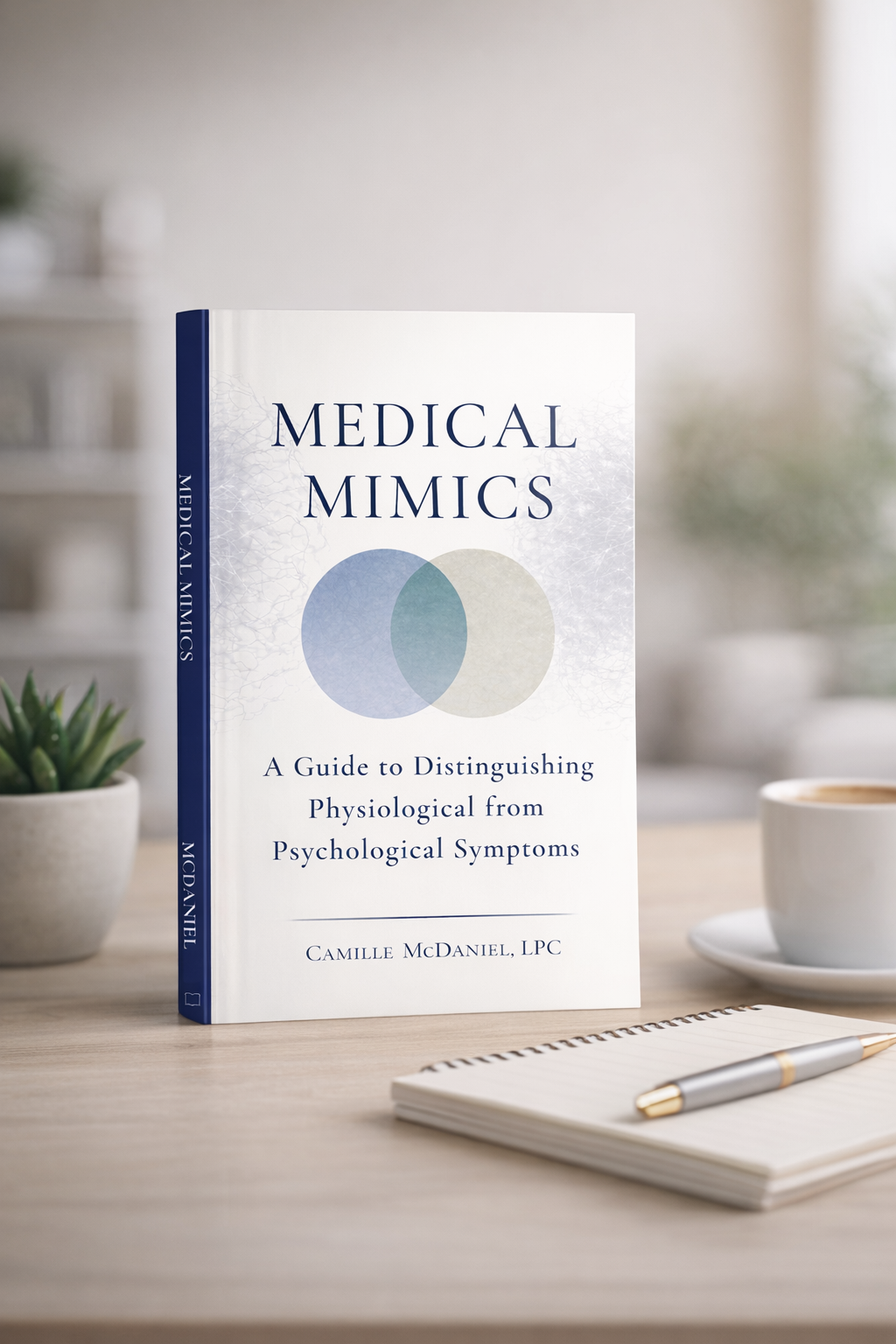
I think Medical Mimics is high-level and practical. I believe it will be invaluable for students, interns, and seasoned counselors alike. I would use this for all of the counselors in my practice.
What the Book Covers
Medical Mimics provides a structured framework to help clinicians recognize when physiological contributors may be influencing psychological presentations.
Inside the book, readers will explore:
• Common physiological conditions that can mimic mental health symptoms
• Patterns that may indicate the need for medical collaboration
• Red flags that warrant referral or further inquiry
• Documentation considerations when medical factors are suspected
• Ethical scope boundaries for mental health professionals
• Strategies for interdisciplinary communication
This book does not provide medical diagnosis.
It strengthens clinical evaluation.
Who This Is For
Medical Mimics is designed for:
• Licensed mental health professionals
• Graduate counseling and social work students
• Clinical supervisors
• Integrative mental health practitioners
• Professionals seeking to strengthen differential discernment
It is especially helpful for clinicians who have encountered cases where:
• Clients are engaged but not improving
• Symptoms seem disproportionate to situational factors
• There is uncertainty about biological influence
If you have ever asked, “Is something being missed?”
This framework was written for you.
What Makes Medical Mimics Distinct
Medical Mimics is designed for:
• Licensed mental health professionals
• Graduate counseling and social work students
• Clinical supervisors
• Integrative mental health practitioners
• Professionals seeking to strengthen differential discernment
It is especially helpful for clinicians who have encountered cases where:
• Clients are engaged but not improving
• Symptoms seem disproportionate to situational factors
• There is uncertainty about biological influence
If you have ever asked, “Is something being missed?”
This framework was written for you.
Frequently Asked Questions
Does Medical Mimics provide medical diagnosis?
No. Medical Mimics does not provide medical diagnosis or treatment recommendations. The framework is designed to help mental health professionals recognize when physiological contributors may warrant medical evaluation and interdisciplinary collaboration.
Is this book within the scope of mental health practice?
Yes. Medical Mimics is written specifically to remain within ethical scope of practice for licensed mental health professionals. It supports clinical discernment and appropriate referral rather than medical decision-making.
Who is Medical Mimics written for?
This book is written for licensed counselors, social workers, psychologists, graduate students, and other mental health professionals seeking to strengthen their understanding of how physiological factors may influence psychological symptoms.
What types of conditions are discussed?
The book explores physiological conditions that may present with psychological symptoms, including metabolic, hormonal, nutritional, inflammatory, and medication-related contributors.
Can this be used in graduate training programs?
Yes. Medical Mimics is appropriate for graduate-level discussion and clinical supervision settings. It can support coursework related to differential assessment, integrative care, and interdisciplinary collaboration.
Will there be training or CE opportunities?
Professional training based on the Medical Mimics framework is currently being updated. Join the email list for updates!
A plan for continuing education is coming and you will be updated if you are on the list.
Is this book appropriate for medical professionals?
Yes. While written primarily for mental health clinicians, the framework may be helpful to medical professionals interested in interdisciplinary collaboration and behavioral health integration.